AR / Spatial Experience
Overview
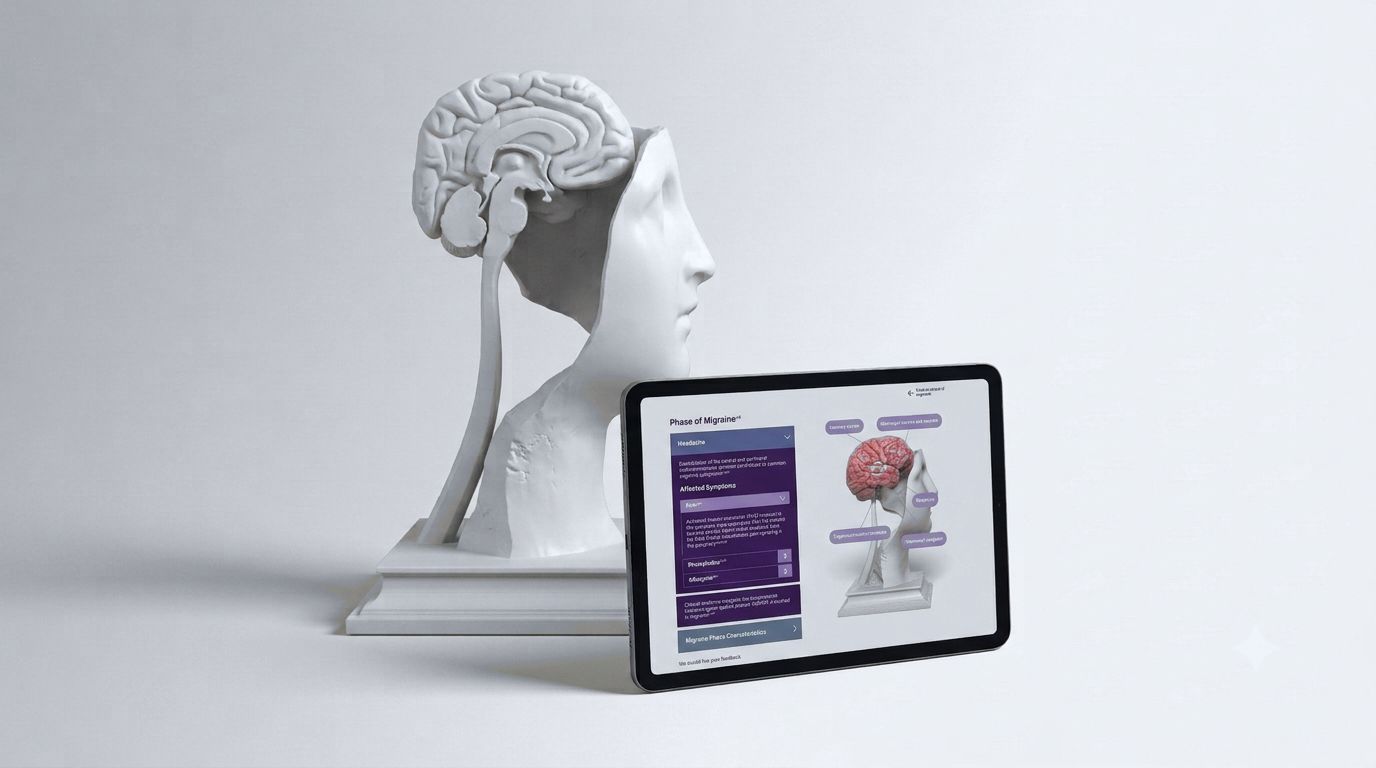
An AR app designed for a conference setting that visualizes the changes taking place in the brain at each phase of a migraine. I created the functional specification for both the app and the on-site installation experience.
My role
Created the functional specification for the app and the on-site installation experience, and designed for adapting the conference build into a medical-education web app.
Project tags
Problem
Complex neuroscience is hard to convey on a booth floor. Novice visitors needed to explore an unfamiliar spatial experience unassisted, in a noisy, high-traffic environment, without instructions.
Process
Self-guided design
Implemented intuitive spatial cues so novice users could explore the entire AR installation unassisted.
Booth layout
Planning document for the AR installation and the conference booth experience.
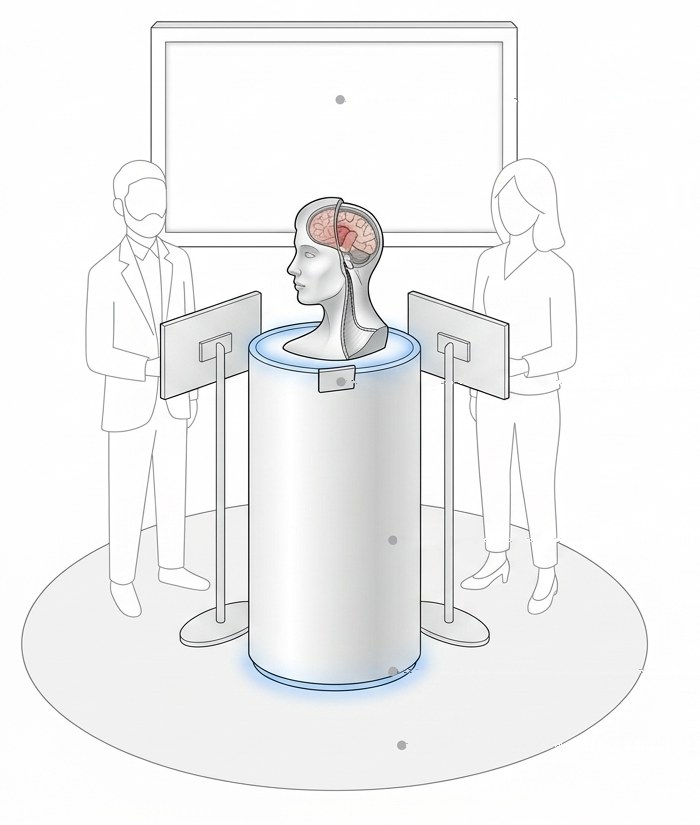
- TV screenPlays the attract state to draw people into the booth.
- Signage & booth graphicsBackdrop, posters, floor and directional graphics, and a sign that explains what the experience is.
- “Do not touch” signA small sign, if visitors need reminding not to touch the model.
- Podium graphicDraws people into the booth toward the AR experience.
- PodiumGlows at the top and bottom.
- CarpetMarks the standing area.
Physical prototyping
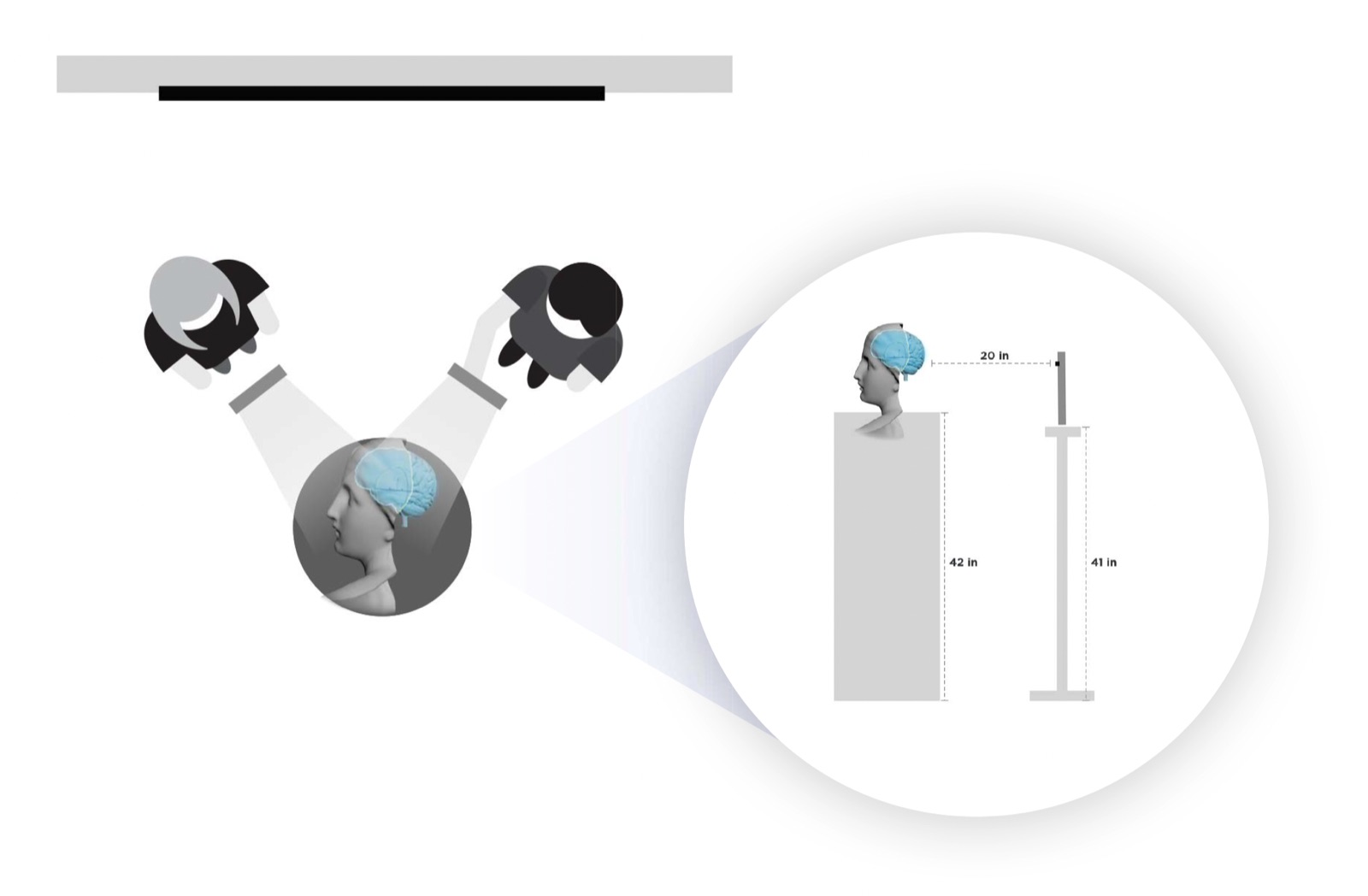
Validated the spatial requirements by user-testing with a physical prototype of the installation before build.
Tools:
- Spatial Prototyping
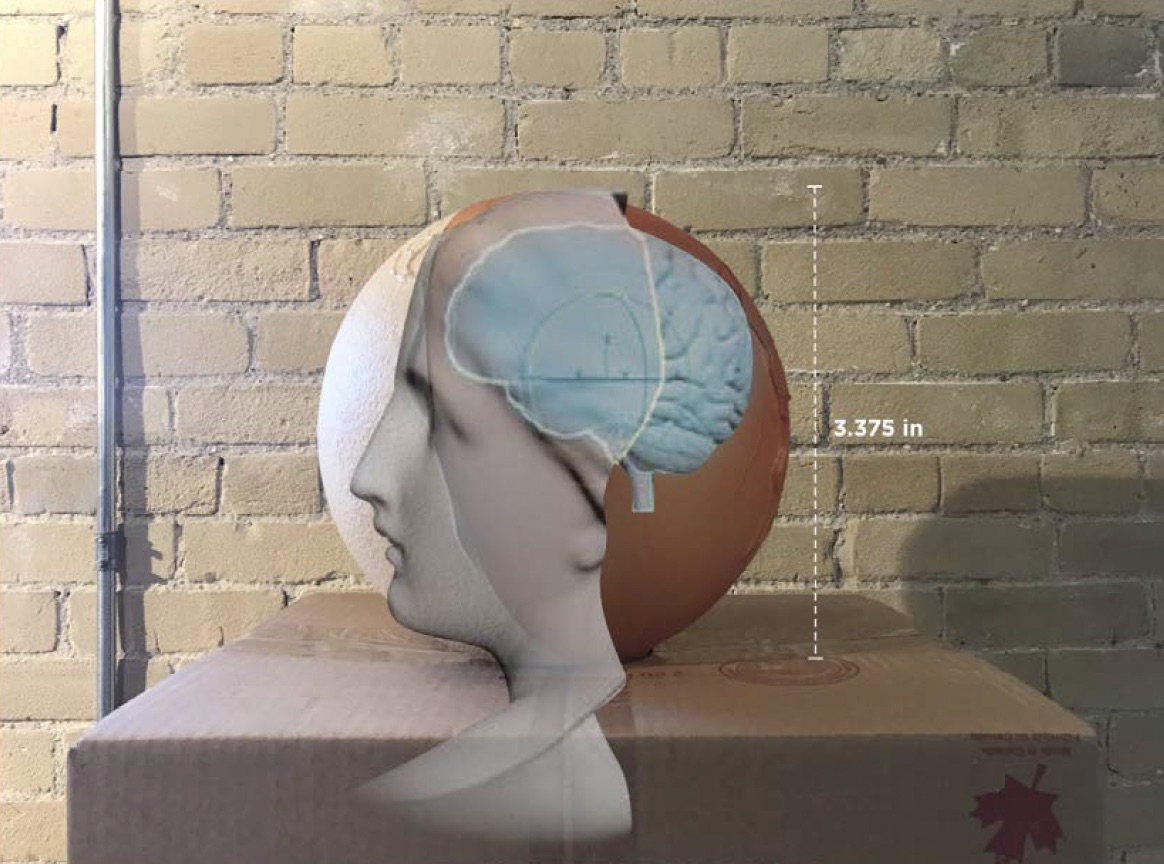
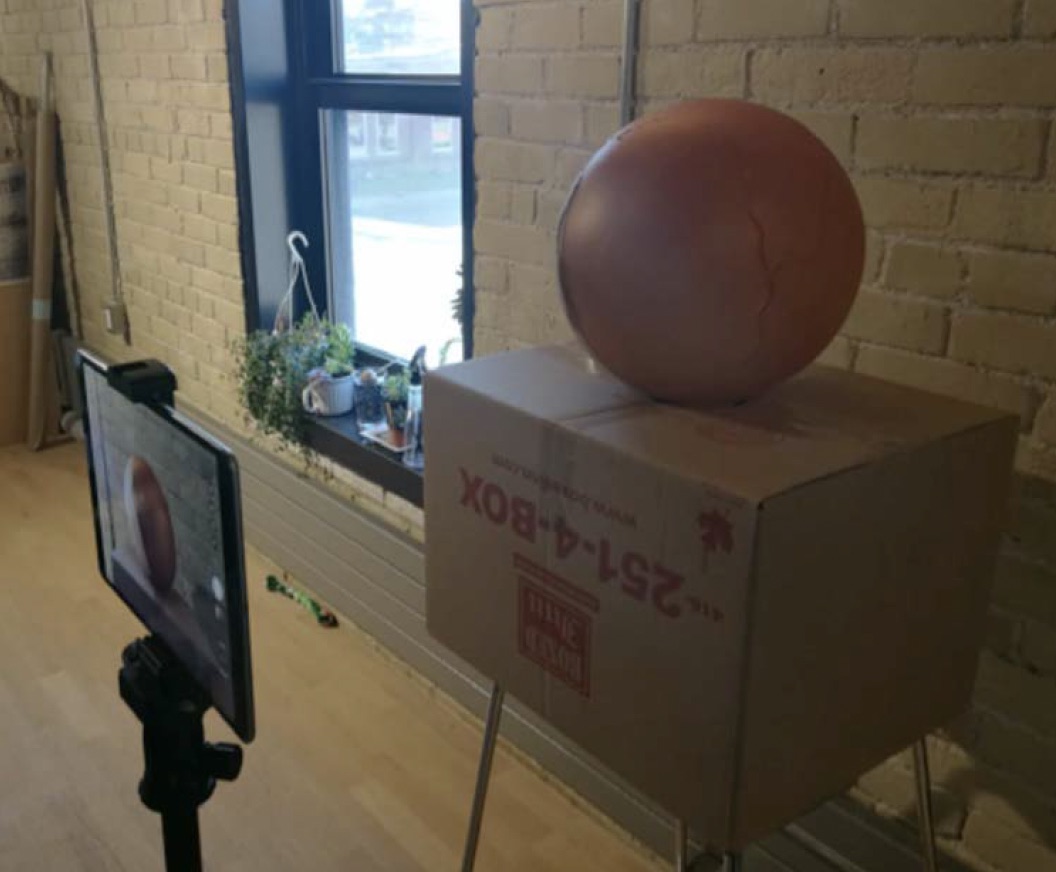
Physical prototype test
Determining the optimal distance between the iPad and the model and the height of the podium.
Emerging tech, built to last
Pushed into spatial computing early, translating a human-centred process into a medium with few established patterns. I designed the conference build so it could be adapted into a lasting medical-education web app.
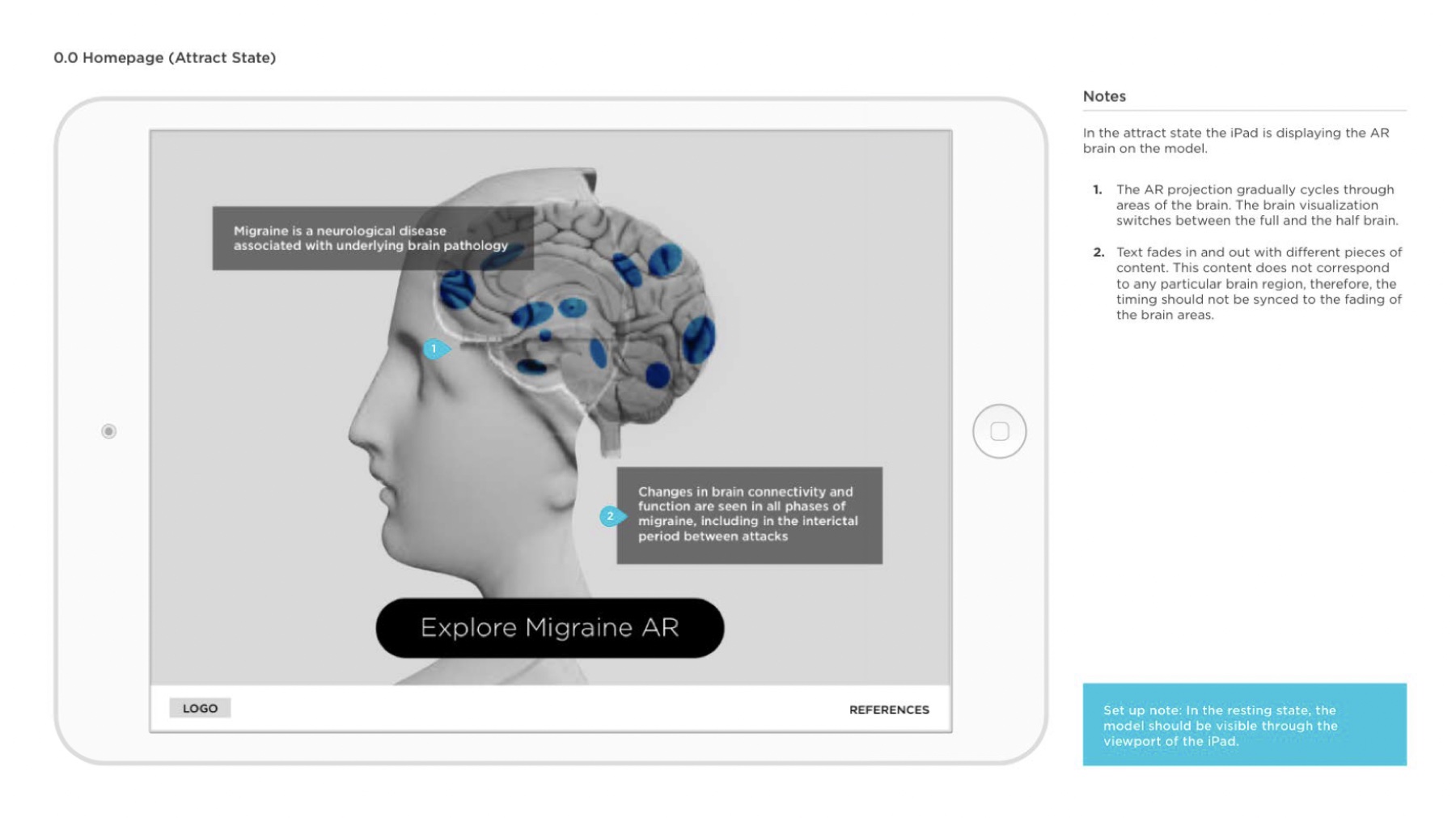
AR app functional specification
The attract state on the iPad, annotated for development: the AR brain cycles through regions while key facts fade in and out.
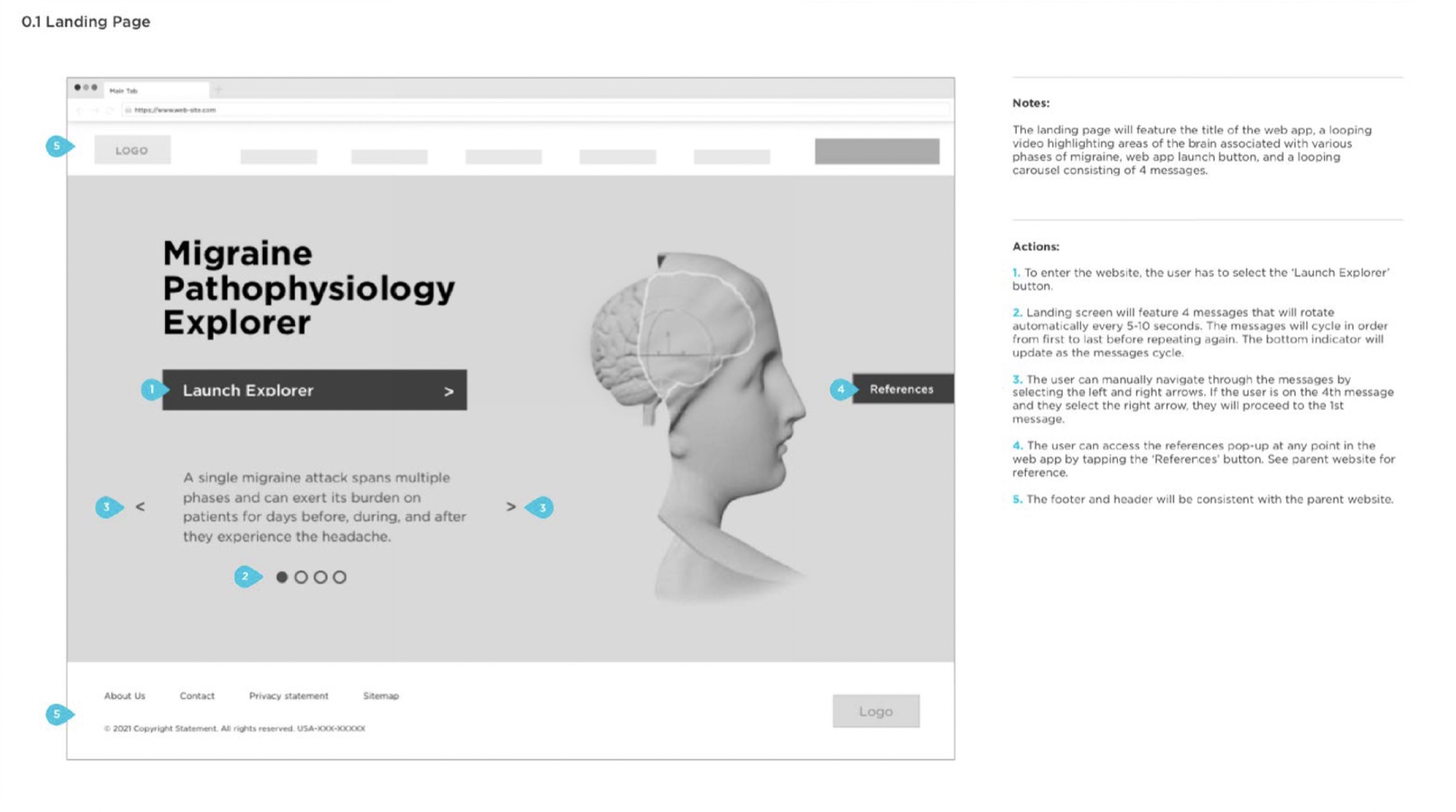
Medical-education web app
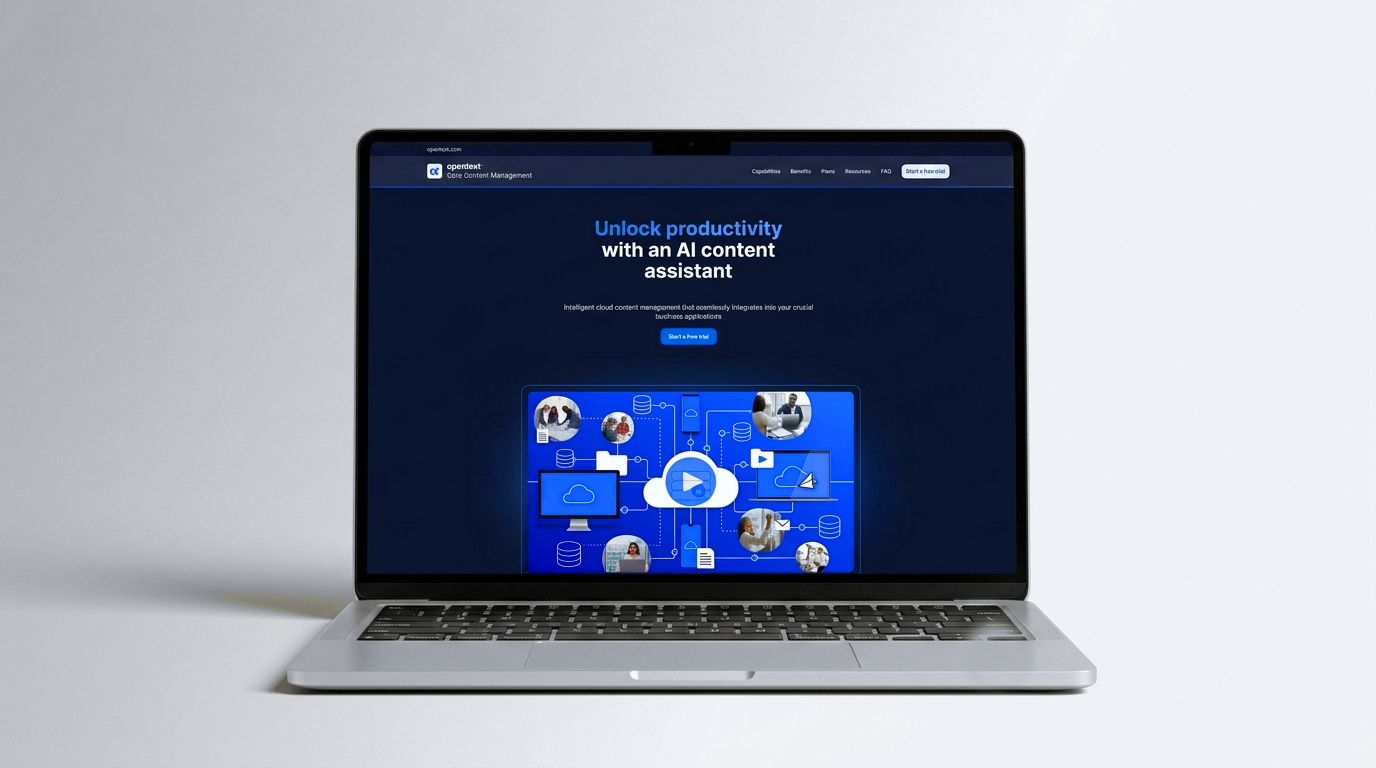
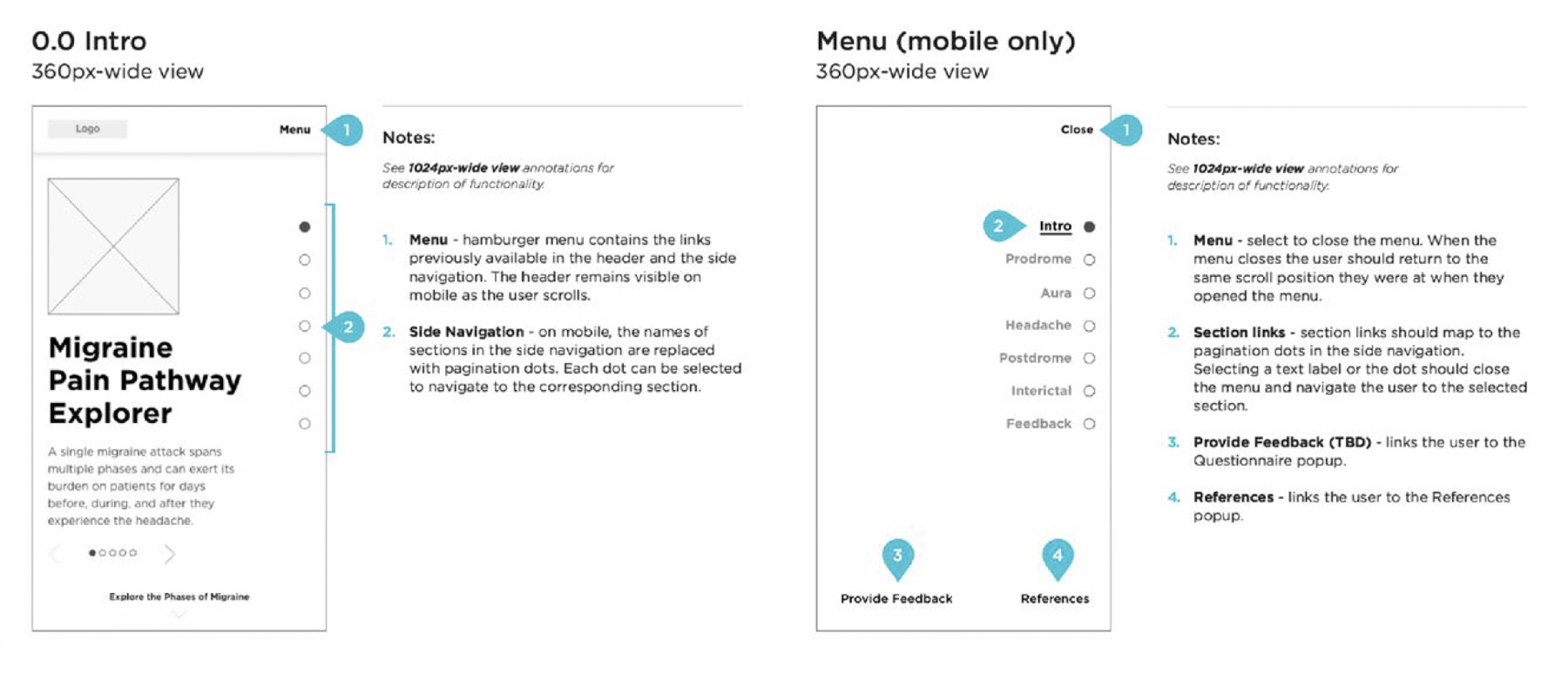
The conference experience adapted for the web, with annotated wireframes for the desktop landing page and the 360px mobile views.
Impact
A conference-floor experience that made complex neuroscience approachable, and durable beyond the event.
Fully self-guided
Visitors explored the installation on their own, with no staff needed.
Tangible science
The four phases of a migraine shown in a visual format that’s easy to understand.
Beyond the booth
Lived on after the conference as a medical-education web app.